The Refurbished Modular Building Process: From Pre-Owned Unit to High-Spec Space
13th May 2026
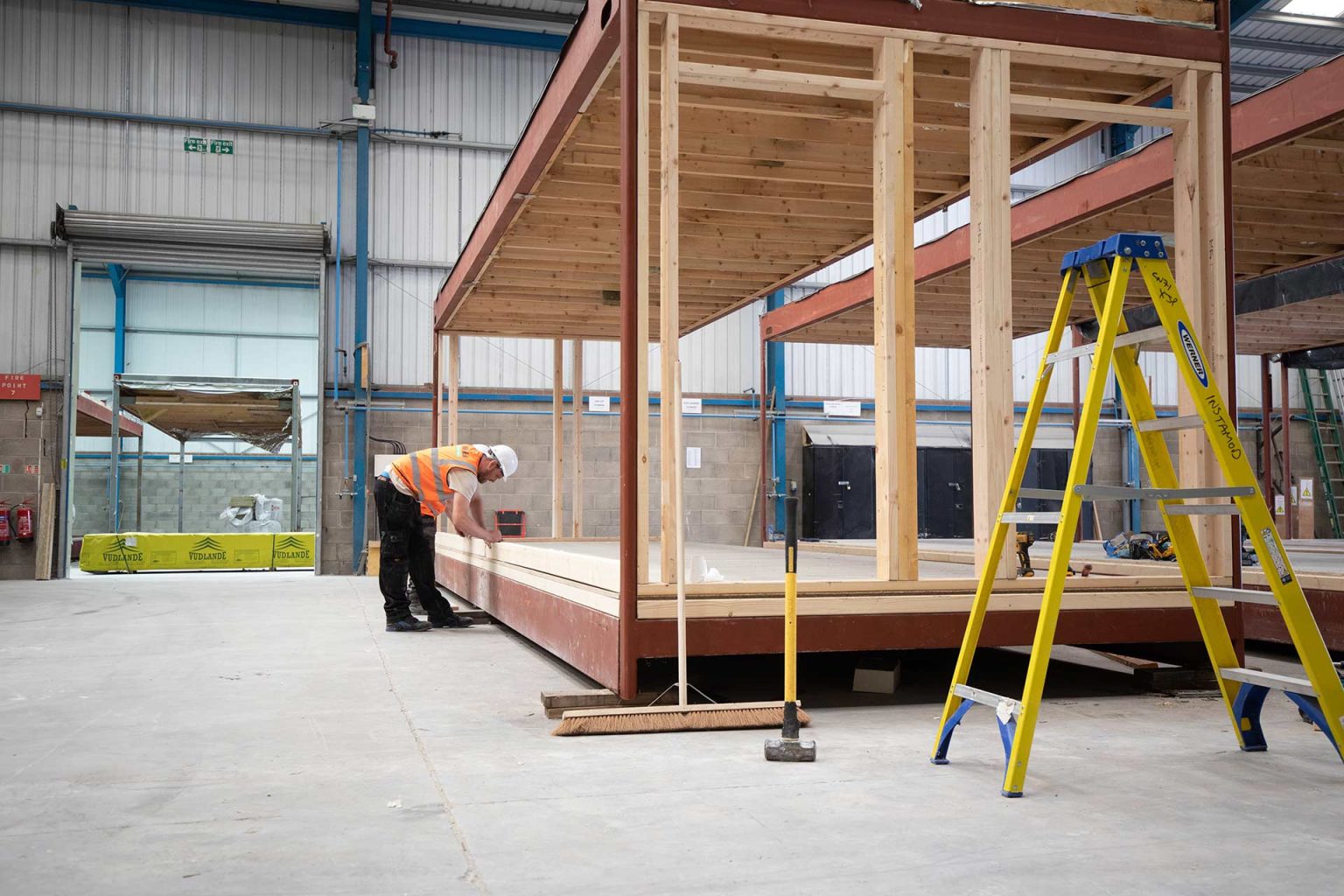
Modular buildings are often built with reusability in mind. Pre-owned units can be assessed, repaired, upgraded, or reconfigured entirely, provided the core structure remains intact.
The buildings can be refurbished into office spaces for businesses, school classrooms, and even nurseries. Modular building refurbishments can extend the life of an existing structure, reducing waste, with faster results, and can help to lower carbon emissions when compared to traditional construction.
Whether you are buying a refurbished modular building or having your existing modular building upgraded, there are a few steps we follow to ensure your modular building is fit for purpose.
In this blog, we explore what modular building refurbishment involves and go through the steps, from assessment to installing a newly refurbished building on site.
Step 1: Assessing The Modular Building
The first step is a thorough assessment of the existing modular building. This would include elements like the age, usage, condition, safety, structural frame condition, and potential new purpose.
Understanding whether the building can be adapted, moved, or refurbished for a new use is key, particularly from a safety perspective. The Health and Safety Executive (HSE) states that when structural stability may be affected during refurbishment, a full survey and assessment of the structure should be carried out.
The condition of the modular building must come first, before refurbishment, and its ability to withstand the changes must take priority; not every unit will be suitable for every purpose.
For example, different organisations might have different requirements:
- Schools might need bright, spacious buildings with toilets and cloakrooms.
- Nurseries may need to be child-safe first, with welcoming facilities.
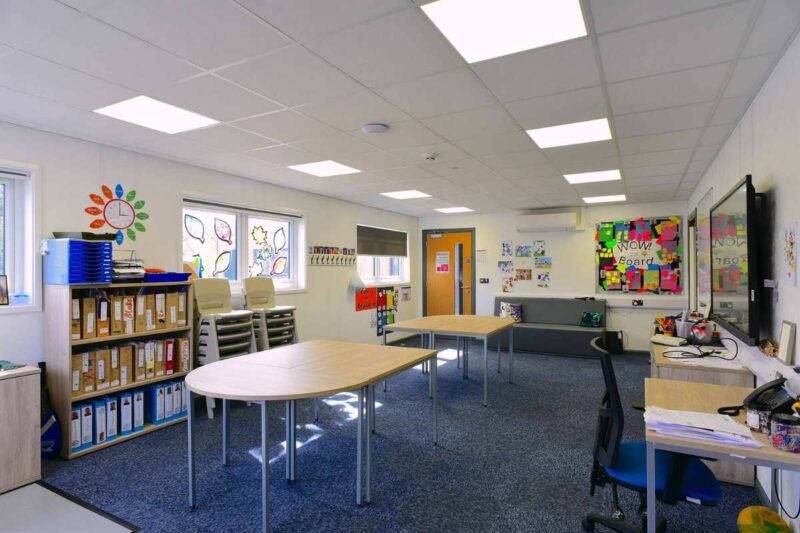
- Businesses may need an open-plan office layout, meeting rooms, or staff rooms.
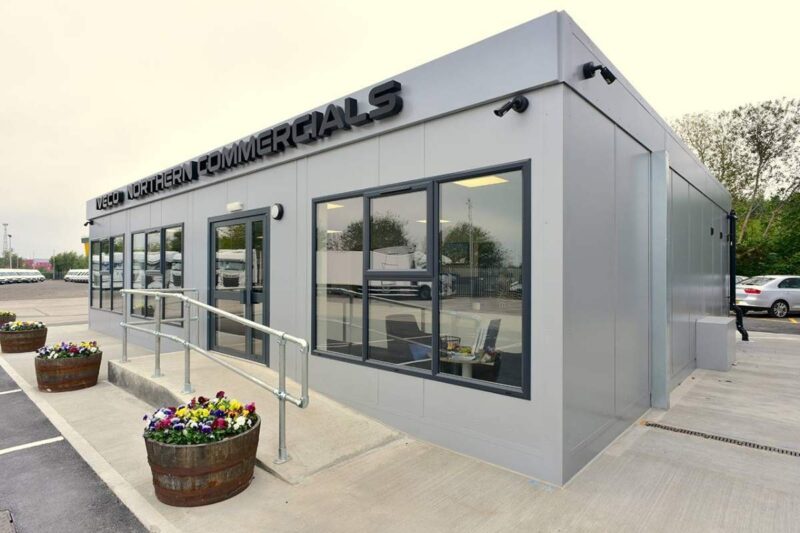
While the versatility of modular buildings is one of their biggest advantages, the flexibility depends on the condition and layout of the unit, potentially limiting its refurbished applications.
Assessments should also consider the logistics of moving and reusing a building. Disconnecting services like electricity, water, and gas may slow the refurbishment process. Access to the site for removal cranes and transport will also need to be assessed before the refurbishment process can begin.
Step 2: Planning The Refurbishment
Once the assessment is completed, the next step is to define the new use. This stage is about turning the existing unit into a practical, compliant, and comfortable environment for its new use.
The UK government has regulations on working environments, covering everything from space to ventilation and temperature control. These factors should be considered when planning a refurbishment.
The refurbishment plan should include:
- Room layout
- Access and circulation
- Heating
- Ventilation
- Lighting
- Internal finishes
- Security
- Aesthetics
- Sector-specific requirements
Schools should consider how the new space is going to support a safe and comfortable learning environment. The UK government has guidance on the school and college building design, including guidance on acoustics, fire safety, air quality, and ventilation.
Businesses looking for offices may choose to focus more on staff needs, efficiency, and versatility. Refurbished modular offices may prioritise open-plan workspaces, meeting rooms, break areas, and even deliveries.
Decisions that impact layout and intended use should be made early, so that refurbishment supports the new use, rather than just making visual improvements.
If you are planning a modular building refurbishment, we can help you assess your options and create a practical plan. Get in touch to discover your refurbishment plan.
Step 3: Upgrading the Services and Interior
The refurbishment process will typically focus on these repairs and upgrades:
- External cladding
- Roofing
- Flooring
- Windows and doors
- Lighting
- Heating
- Electrical
- Wall finishes
These changes and upgrades help to ensure the building is not only visually improved but also more comfortable, compliant, and efficient for daily use.
This is where refurbished modular buildings can be transformed into high-spec workplaces, classrooms, and nurseries. The goal is to keep the core value of the structure while improving elements like comfort, energy efficiency, accessibility, long-term usability, and durability.
Step 4: Preparing and Installing A Refurbished Building
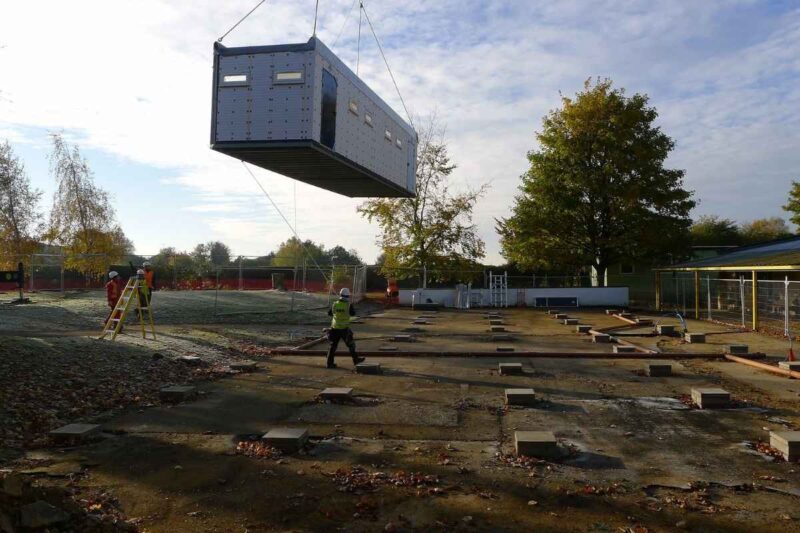
Before the delivery of a refurbished modular building, the site needs to be prepared. Which typically involves:
- Checking ground conditions
- Arranging foundations
- Confirming or creating delivery access
- Preparing services like electricity, water, and gas
- Managing disruption
Site preparation can delay the installation if a building cannot be delivered, positioned, or connected properly. HSE guidance on structural alterations and dismantling highlights the importance of any element that might affect stability.
Each project will be different, but the underlying principle is the same; delivery and installation should be planned and carefully before the building is moved and installed.
Why Choose Refurbished Modular Buildings?
With the right plan, refurbishment of modular buildings is hard to distinguish from new builds, and they provide a faster route to a usable space over traditional construction methods. Modular construction uses off-site, factory methods. This can help reduce disruption on-site and support faster, predictable project delivery and timelines.
Refurbishment can also support sustainability goals by reusing or upgrading existing modular buildings, helping to reduce demand for new materials and keeping construction materials in use for longer.
Investing in refurbished modular buildings can help organisations meet their sustainability goals. WRAP guidance emphasises the importance of your ‘whole-life’ carbon impact and the need for reduction, reuse, and recycling. This makes refurbished buildings a sensible choice for organisations, financially and environmentally.
The right refurbishment plan can turn a pre-owned modular building into a comfortable, high-quality space, with a modern finish and customised layouts. For businesses and schools, this means extra space without compromising on usability and sustainability.
If you are ready to find a refurbished modular building, or you have an existing modular building in need of refurbishment, you can get started with us today.
You may also like
How can we help you with your next project?
